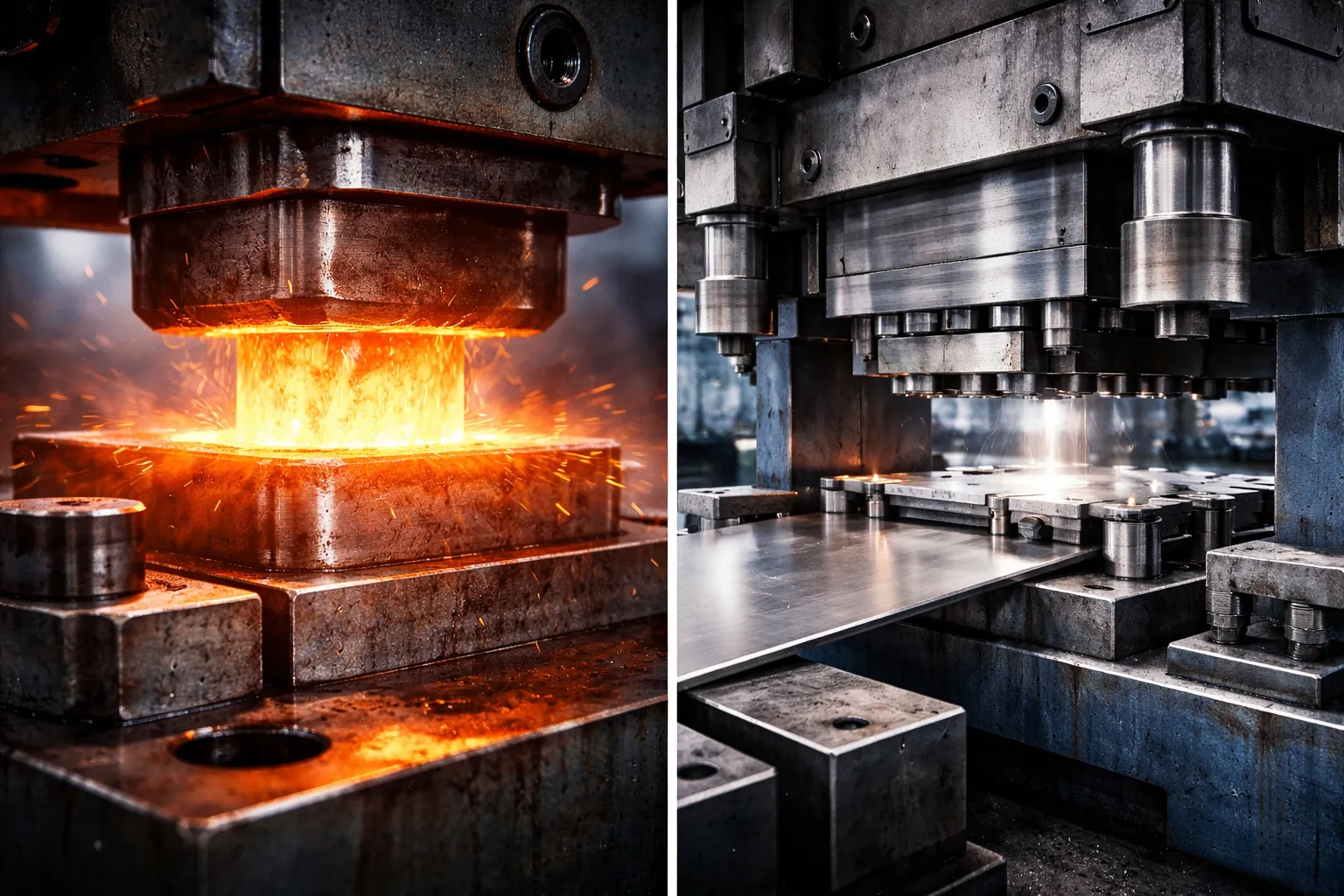
Choosing the wrong tool steel is a costly mistake that can halt production. Your project's success depends on getting it right, but the options can be confusing.
The key difference is temperature. Use hot work tool steel1 for applications above 316°C (600°F) where tools must stay tough and hard. For jobs at or near room temperature, choose cold work tool steel2 for its superior hardness and wear resistance3.
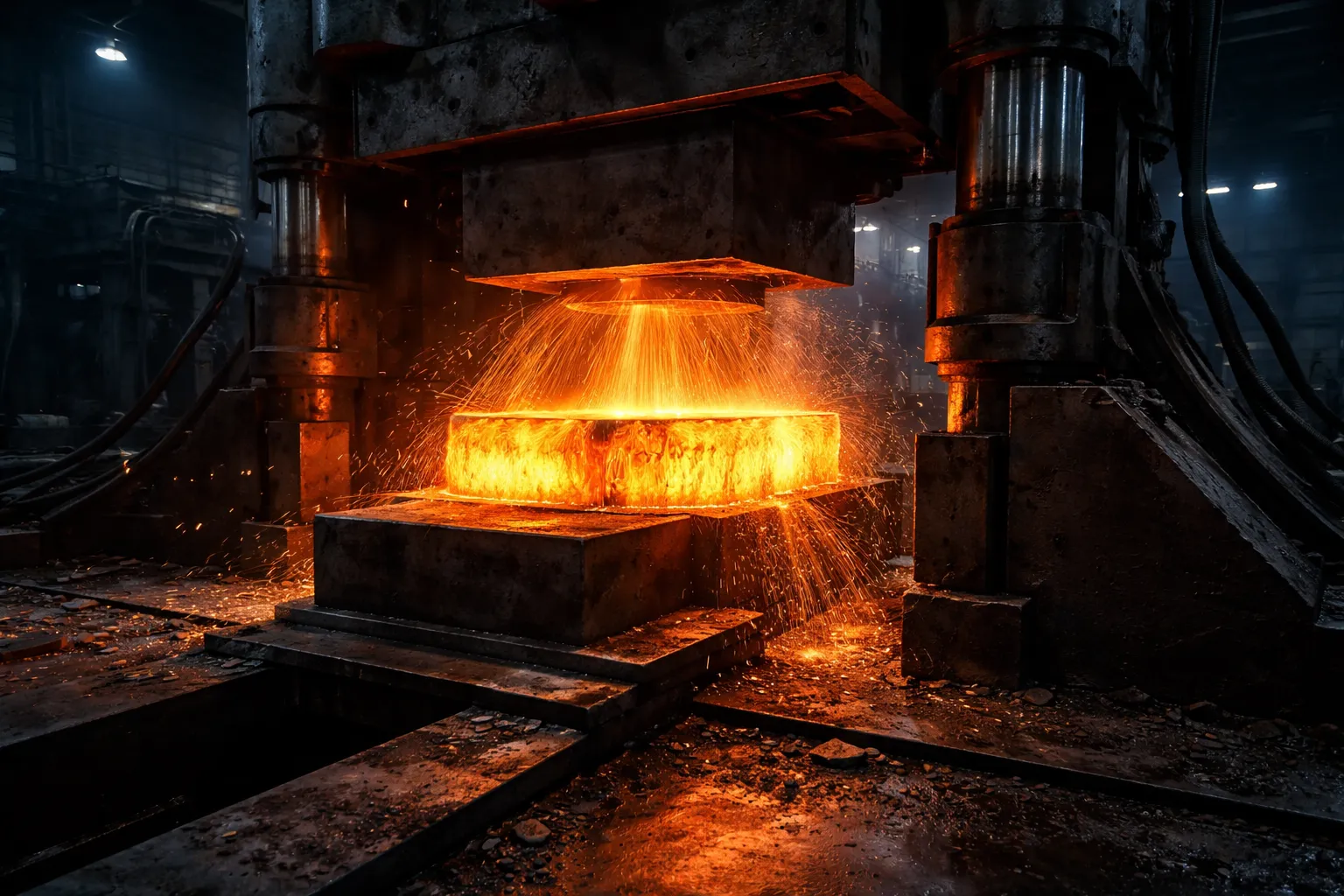
I've learned this lesson the hard way over the years. A single wrong choice can lead to cracked dies, worn-out tools, and a lot of wasted time and money. It’s a frustrating experience that I want to help you avoid. The good news is that understanding the fundamental differences between these two steel families is straightforward. Once you know what to look for, you can select the perfect material for your job with confidence. Let's break it down so you can get it right every time.
What Exactly Defines Hot Work Tool Steel?
Are your tools failing or deforming under intense heat? It’s a common problem when forming hot metals, and it can ruin an expensive die. Hot work steels are the answer.
Hot work tool steel, like the popular H13 grade4, is defined by its special ability to maintain high strength, hardness, and toughness5 at very high temperatures. Alloying elements like chromium, molybdenum, and tungsten make this possible, preventing the steel from softening or cracking under heat.
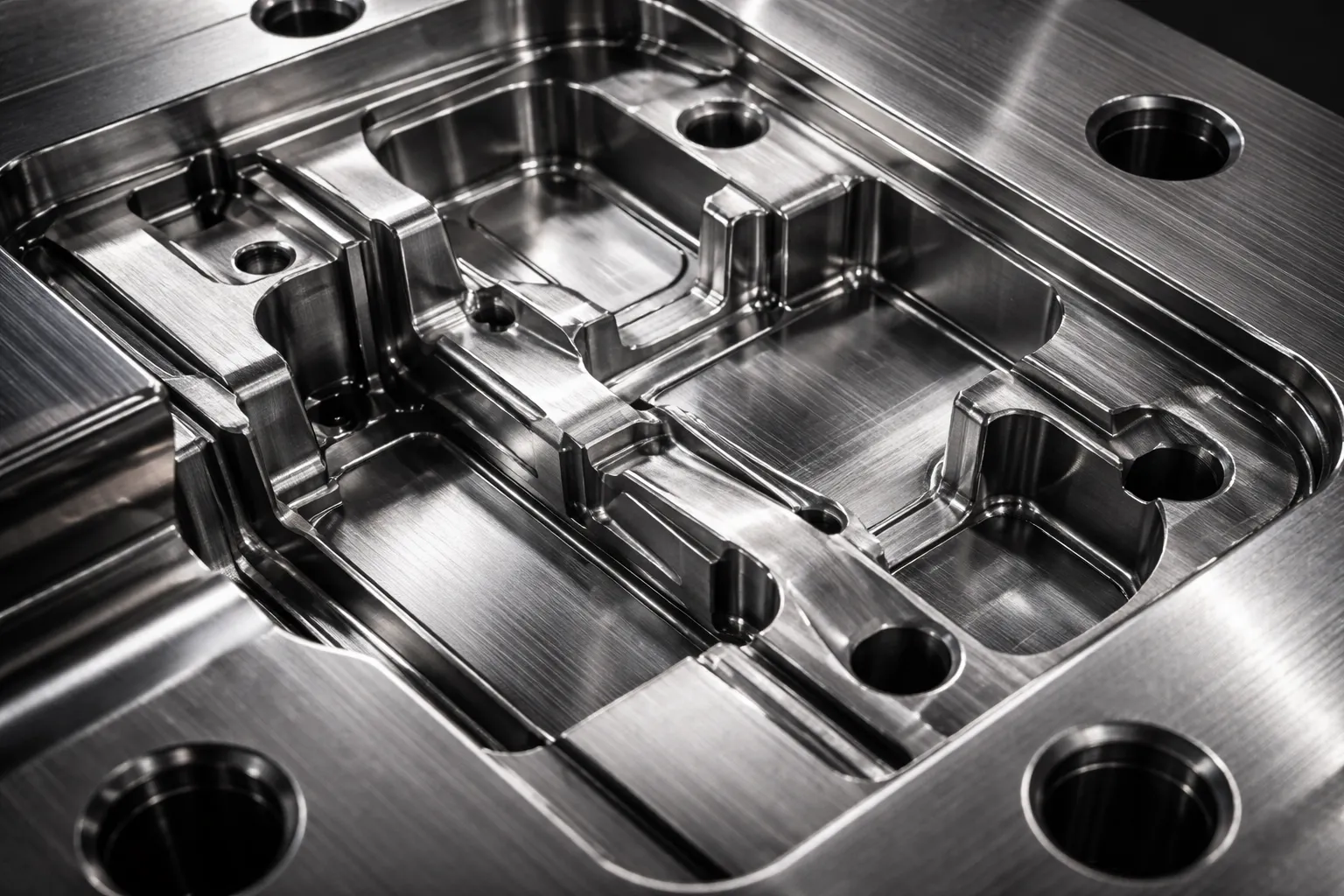
When I first started, I thought steel was just steel. I learned a tough lesson on a project involving an aluminum extrusion die. We used a standard, tough steel, but not a true hot work grade, to save on cost. The die looked perfect, but it started to deform after just a few hundred cycles. The constant exposure to the hot aluminum caused the steel to lose its temper and strength. We had to stop production and remake the entire tool with H13. That experience taught me that the "hot work" designation isn't just a label; it's a critical performance guarantee.
Key Properties of Hot Work Steels
The magic of hot work steels comes from a few core properties. First is high-temperature strength6, also called "red-hardness7". This means the steel stays hard and resists deformation even when it's glowing red. Second is thermal shock resistance8. These steels can handle rapid heating and cooling cycles without cracking, which is common in processes like die casting. Finally, they have excellent toughness5, which allows them to absorb impact and pressure without fracturing, even at high temperatures.
Common Grades and Applications
Different applications call for slightly different properties. We can see this in the common grades.
| 等级 | Key Characteristics | 典型应用 |
|---|---|---|
| H11 | Good toughness, high red-hardness | Extrusion dies, forging dies |
| H13 | Excellent toughness & thermal shock resistance | Die casting, extrusion, forging |
| H21 | Tungsten-based, highest red-hardness | Mandrels, hot punching tools |
As you can see, H13 is a versatile all-rounder, which is why it's one of the most common tool steels I see in shops today.
So, What Makes Cold Work Tool Steel Different?
Do your stamping dies or cutting tools chip and wear out far too quickly? This constant downtime for sharpening or replacement eats into your profits. Cold work steels are made for this fight.
Cold work tool steel is different because it is designed for maximum hardness and wear resistance3 at room temperature. It sacrifices high-temperature strength6 for extreme abrasion resistance, making it ideal for cutting, shearing, and forming unheated materials.
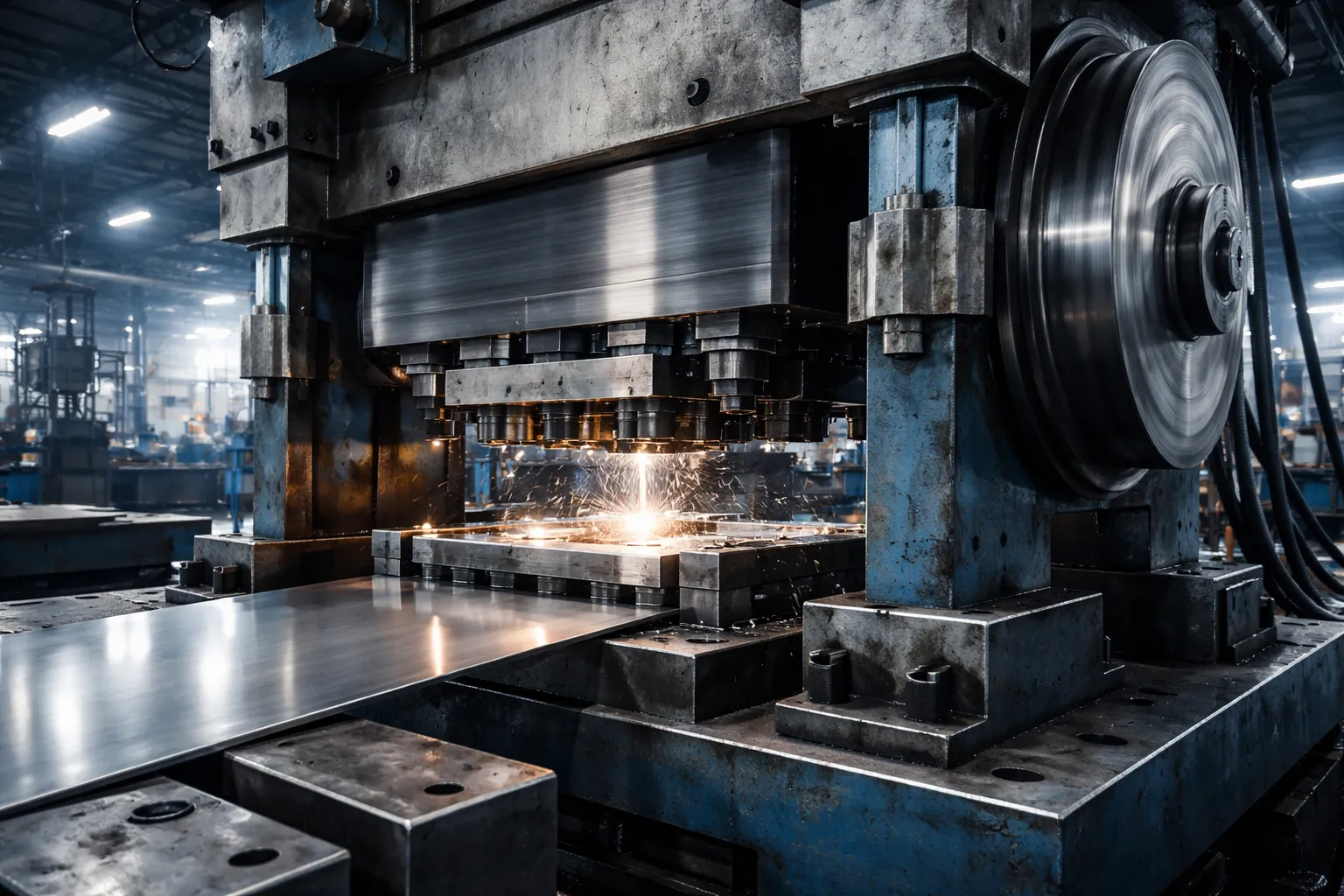
The main goal here is to resist getting worn down. Think about a die that stamps out thousands of metal washers an hour. The cutting edge of that die is under incredible abrasive stress. I remember a specific job where we were blanking parts from a tough stainless steel. We started with a general-purpose tool steel, and the die edge was dulling after just 10,000 hits. We switched to D2, a high-carbon, high-chromium cold work steel. The D2 die cost more upfront, but it ran for over 100,000 hits before needing its first sharpening. The difference in performance was night and day. That’s because cold work steels are alloyed specifically to create very hard carbide particles in the steel, which act like tiny, wear-resistant shields.
Core Characteristics of Cold Work Steels
Unlike their hot work cousins, these steels focus on a different set of properties. The number one priority is high hardness. They are heat-treated to achieve hardness levels often between 58 and 64 on the Rockwell C scale (HRC). This hardness directly translates to wear resistance3, which is the ability to resist being worn away by friction and abrasion. While they are very hard, they must still have adequate toughness5 to prevent the cutting edges from chipping or fracturing under the shock of stamping or shearing operations.
Typical Grade Families and Uses
Cold work steels are often grouped into three main families based on their heat treatment and composition.
| Family | Common Grade | Characteristics | 典型应用 |
|---|---|---|---|
| Oil-Hardening | O1 | Good machinability, easy to heat treat | Gages, cutting tools |
| Air-Hardening | A2 | Good balance of toughness & wear | Stamping dies, forming dies |
| High-Carbon | D2 | Excellent wear resistance, less tough | Blanking dies, long-run tooling |
A2 is my go-to for a lot of general-purpose tooling because it offers a great compromise. But for those really demanding, high-volume jobs, the superior wear resistance3 of D2 is often worth the extra cost and slightly lower toughness5.
How Does Temperature Guide Your Steel Choice?
Are you unsure if your application is truly "hot work" or "cold work"? Making the wrong call here is a gamble that can lead to immediate tool failure and a lot of wasted effort.
Temperature is the clearest guide. If your tool's working surface will consistently operate above 316°C (600°F), you need hot work steel. Below this temperature, a cold work steel is almost always the better, harder, and more wear-resistant choice.
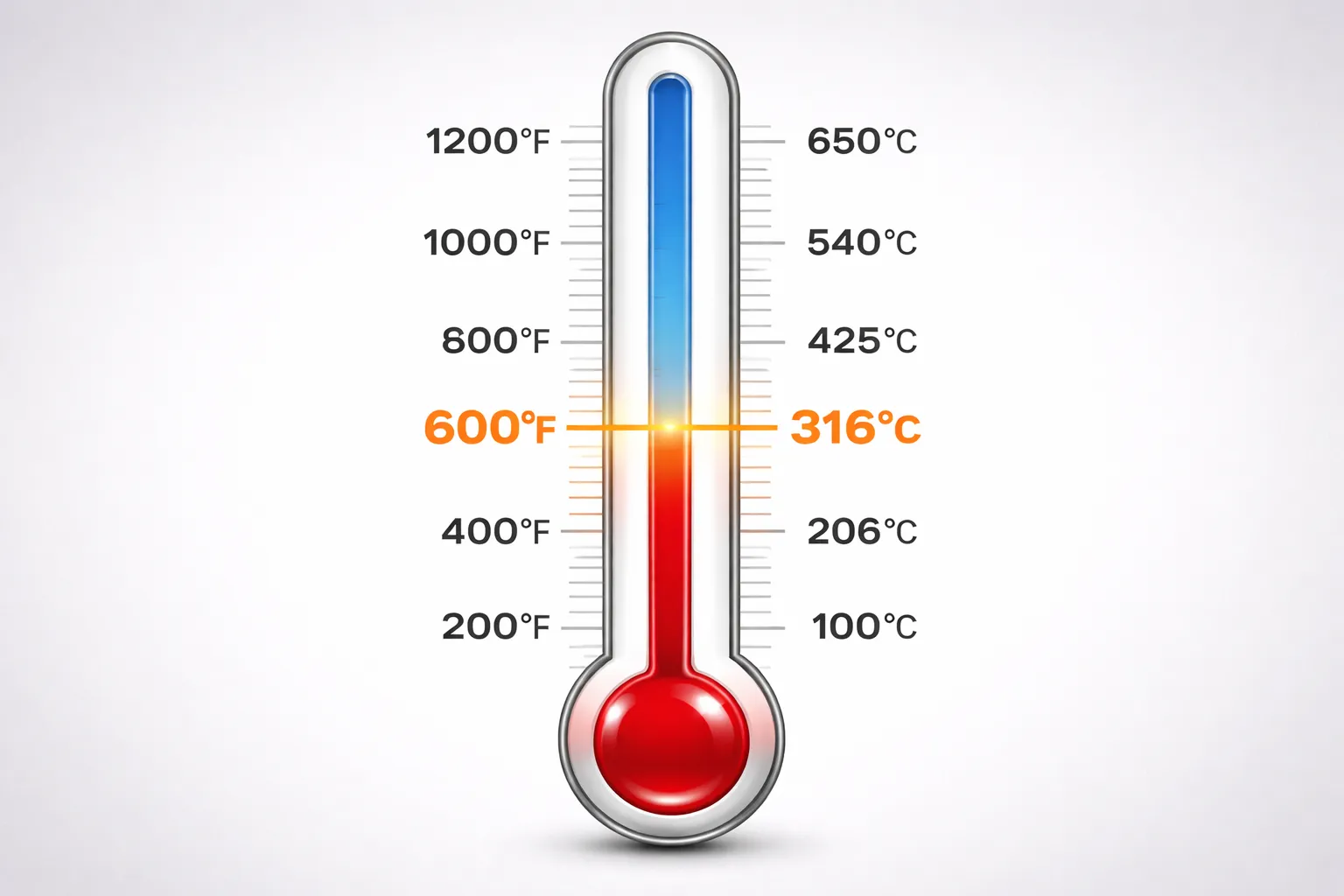
This isn't just an arbitrary number. It’s based on the fundamental metallurgy of the steels. I once saw a team try to use a D2 cold work steel9 die for a warm-forging application that ran around 400°C (750°F). They thought that since it wasn't "red hot," the D2 would be fine, and they wanted its extreme hardness. The die failed catastrophically in less than an hour. The heat caused the D2 to "over-temper," making it lose its hardness and strength completely. It became soft and deformed under pressure. This is the critical difference: hot work steels are designed to hold onto their hardness at high temperatures, a property that cold work steels simply do not have.
Understanding the "Tempering Back" Line
Every tool steel is hardened and then "tempered" at a specific temperature to achieve the desired balance of hardness and toughness. If a cold work steel is exposed to temperatures higher than its original tempering temperature, it begins to soften permanently. This is called "tempering back10." Cold work steels like O1, A2, and D2 are tempered at relatively low temperatures, usually below 316°C (600°F). In contrast, hot work steels like H13 are specifically tempered at much higher temperatures, locking in their strength and ensuring they don't soften when used in a hot environment.
A Practical Temperature Guide
Let's make this simple. Think of the temperature at the working surface of your tool.
- Below 200°C (400°F): This is classic cold work territory. Stamping, blanking, rolling, and most cutting operations fall here. Use an O, A, or D series steel for the best hardness and wear resistance3.
- 200°C to 316°C (400°F to 600°F): This is a gray area. Some high-speed stamping can generate enough friction to reach these temperatures. A high-temper cold work steel or even a shock-resistant grade might work, but this is where you start to consider hot work steel for safety.
- Above 316°C (600°F): This is non-negotiable hot work territory. Die casting, extrusion, and forging all operate well above this line. You must use an H-series steel like H13 to prevent tool failure.
Are There Other Factors Besides Temperature to Consider?
You've figured out the temperature, but the choice isn't over. Ignoring factors like toughness5 or cost can lead to a tool that fails unexpectedly or is too expensive for the job.
Yes, absolutely. After temperature, you must consider the trade-off between hardness and toughness5. You also need to think about the specific wear conditions, the machinability11 of the steel, and the overall budget for the material and its heat treatment.
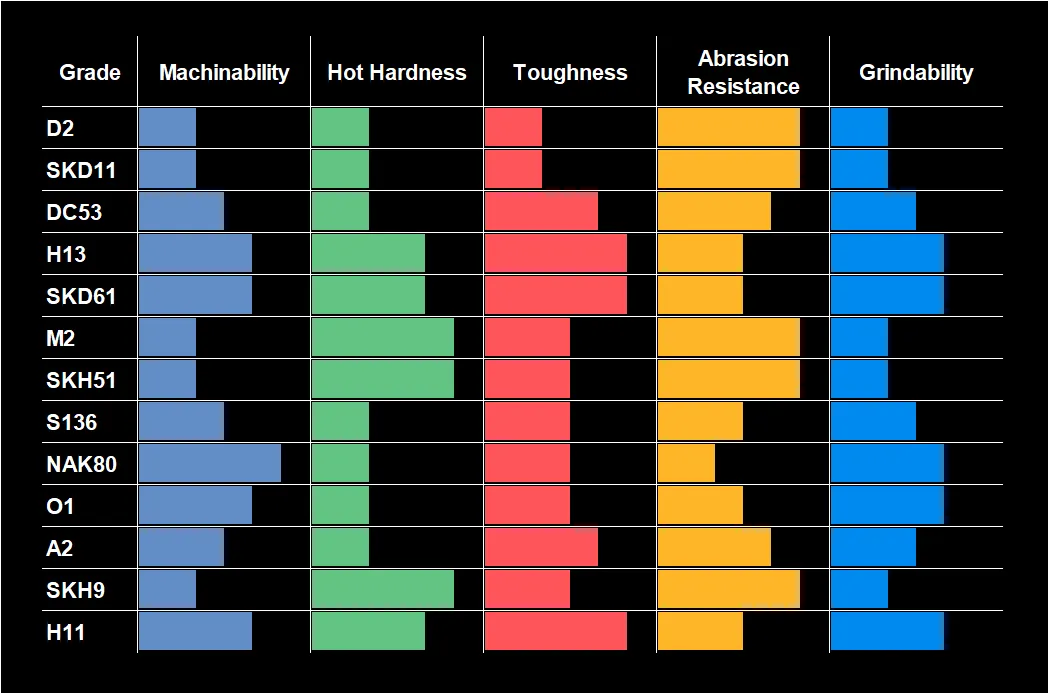
I always tell my younger engineers that steel selection is a balancing act. You can't have everything. A steel that is extremely hard and wear-resistant is usually more brittle and prone to chipping. A steel that is extremely tough and can absorb huge shocks is usually softer and will wear out faster. On one project, we needed a tool for a coining operation that involved high pressure but minimal material cutting. We chose A2 for its good balance. For another tool that was a simple punch and had to withstand repeated impact, we used S7, a shock-resistant tool steel12, because toughness5 was more important than wear resistance3. The final choice always depends on the specific demands of the job.
The Hardness vs. Toughness Trade-off
This is the most important concept to grasp after temperature.
- 硬度 is the resistance to indentation and scratching. It's what gives a tool its wear resistance3. D2 is a champion of hardness.
- Toughness is the ability to absorb energy and impact without fracturing or chipping. H13 is a champion of toughness5.
You have to decide which is more likely to cause your tool to fail. Will it wear out, or will it break? If it's a high-wear stamping die, prioritize hardness (D2). If it's a forging die that sees massive impact, prioritize toughness5 (H13).
A Multi-Factor Comparison
Let's put our most common examples side-by-side to see how they stack up across several factors. This is the kind of chart I sketch out when making a decision.
| Feature | H13 (Hot Work) | D2 (Cold Work) | A2 (Cold Work) |
|---|---|---|---|
| Primary Job | High-Temp Tooling | High-Wear Tooling | General-Purpose Tooling |
| Operating Temp | > 316°C (600°F) | < 200°C (400°F) | < 200°C (400°F) |
| Hardness (Typical) | 45-52 HRC | 58-62 HRC | 57-60 HRC |
| Toughness | Very High | Medium | High |
| Wear Resistance | Good (at temp) | Excellent | Good |
| Cost | High | High | Medium |
This table makes the trade-offs clear. D2 gives you the best wear resistance3 but at the cost of toughness5 and a higher price. A2 is the balanced middle ground for cold work. And H13 dominates in toughness5 and high-heat performance, but you sacrifice the extreme hardness needed for cold work wear resistance3.
Conclusion
Choosing between hot and cold work steel starts with temperature. Then, balance the need for hardness against toughness5 for your specific application to ensure your tools perform reliably and last long.
Understanding the applications of hot work tool steel can help you choose the right material for high-temperature environments. ↩
Learn why cold work tool steel is ideal for room temperature applications with superior hardness and wear resistance. ↩
Explore how wear resistance in tool steel extends the life of tools by preventing abrasion and friction damage. ↩
Discover why H13 is a popular choice for hot work applications due to its toughness and thermal shock resistance. ↩
Understand the importance of toughness in absorbing impact and pressure without fracturing, especially in high-temperature applications. ↩
Find out how high-temperature strength ensures tool steel maintains hardness and resists deformation under heat. ↩
Learn about red-hardness and its role in keeping tool steel hard even when glowing red hot. ↩
Learn how thermal shock resistance prevents cracking in tool steel during rapid heating and cooling cycles. ↩
Discover the advantages of D2 steel's high hardness and wear resistance for long-lasting cold work tooling. ↩
Understand what is tempering back and when to use it. ↩
Understand how machinability affects the ease of shaping and finishing tool steel for specific applications. ↩
Find out how shock-resistant tool steel absorbs impact, making it suitable for high-pressure applications. ↩